Crash, Burn, and Come Back Swinging: Why Your Worst Show Is Actually Your Origin Story
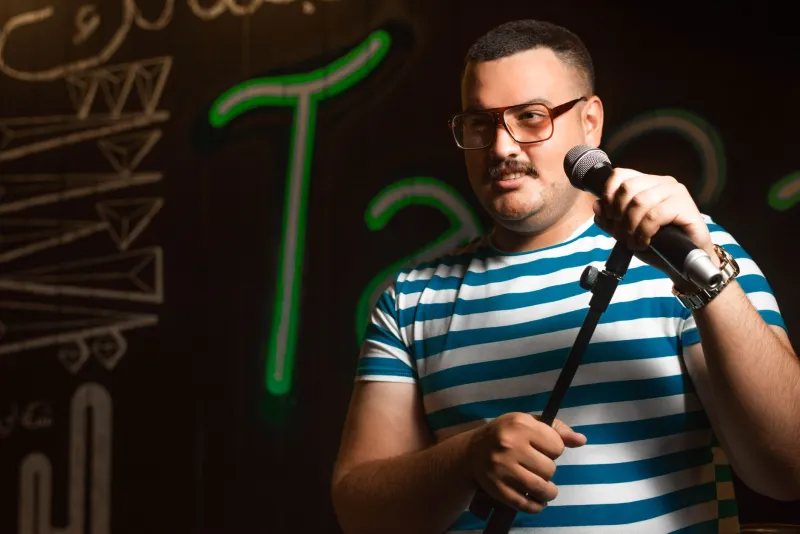
Let's paint a picture. You're standing at the edge of a stage — maybe it's a dingy comedy club in Cincinnati, maybe it's a bar in Nashville where the bartender is louder than your amp, maybe it's an open mic in Brooklyn where the audience is two drunk guys arguing about the Knicks. You open your mouth. Nothing lands. The silence is so thick you could spread it on toast. You walk off that stage wanting to dissolve directly into the linoleum floor.
Congratulations. You just had the best thing happen to your career.
Yeah, we said it. Welcome to Ronnieland, where we find the good vibes even in the catastrophic ones.
The Myth of the Flawless Beginning
Here's the lie the entertainment industry has been selling forever: that the greats just showed up and were great. We see the sold-out arenas, the platinum plaques, the Netflix specials, and our brains fill in the blank with some fantasy montage of effortless ascent. What we don't see — what nobody posts on Instagram — is the first show where Dave Chappelle forgot his punchline, or the bar gig where a future Grammy winner played to four people and a pool table.
But those moments exist. For literally everyone.
John Mulaney, one of the most polished stand-ups working today, has spoken openly about absolutely dying on stage in his early years. Taylor Swift's first performances were far from the stadium spectacles she's known for now. Even beyond the mega-famous, every working comedian and touring musician you've ever admired has a "worst show" story that they'll tell you — usually with a laugh, usually over a beer, always with a kind of reverence that makes you realize the bombing wasn't just a setback. It was a setup.
What's Actually Happening in Your Brain When You Bomb
Psychologists who study performance anxiety and resilience have a term for what happens after a public failure: post-traumatic growth. Unlike the more famous cousin of that phrase, this is the version where your brain, after processing humiliation, actually rewires itself to be more adaptable, more creative, and frankly, more interesting.
When a show goes sideways, you're forced into a level of self-examination that a standing ovation will never give you. You start asking real questions. Why didn't that bit work? Was my energy off? Did I not actually know my material as well as I thought? Was I performing for the audience in front of me or the imaginary cool audience in my head?
Those questions are gold. Pure, uncut, career-building gold.
A comedian who bombs learns to read a room in a way that no acting class teaches. A musician who plays a dead crowd learns about song order, stage presence, and the brutal honesty of silence in a way that no producer in a studio can replicate. Failure is the most expensive masterclass you'll ever take — and you don't even have to sign up for it on a course platform.
The Relatability Factor Nobody Talks About
Here's something that might genuinely surprise you: audiences trust artists who've struggled more than artists who seemed perfect from jump.
There's a reason we love the comeback story. There's a reason "From the bottom, now we're here" hits different than "I was always here." Human beings are wired to connect with vulnerability, with the evidence that someone else has felt the particular sting of not being good enough yet — and kept going anyway.
When an artist references their early failures, something shifts in the room. The audience stops being spectators and starts being believers. Because now they know: this person is real. This person failed in public and showed up again anyway. That's not just entertainment — that's inspiration with a backbeat.
Comedians who lean into their disaster origin stories often find that those stories become their most powerful material. Musicians who write about the years nobody came to their shows find those songs resonate the hardest with the fans who feel unseen in their own lives. The bomb doesn't just build you — it builds your connection to the people you're performing for.
The Practical Upside (Yes, There Is One)
Beyond the psychology and the feels, there are genuinely practical reasons why bombing early is a career advantage:
You figure out what doesn't work before you have an audience big enough to make it matter. Getting your bad material out of your system in front of fifteen people is infinitely better than discovering it in front of fifteen thousand.
You develop stage instincts you can't manufacture. The ability to pivot when a joke dies, to hold the room when the energy drops, to find the funny in the awkward — that's a skill set built entirely from failure. You cannot fake that experience.
You build a higher tolerance for risk. Artists who've already survived their worst night stop being paralyzed by the fear of a bad night. You've already been to the bottom of the pool. You know you can swim back up.
You find your real people. Weirdly, some of the most loyal fans an artist ever gets are the ones who were there during the rough early days. There's a shared ownership in having witnessed someone's messy beginning that creates a bond no algorithm can replicate.
So You Bombed. Now What?
If you're reading this because you just had a show that went sideways and you're currently stress-eating cereal at midnight questioning every life choice — first of all, same, and second of all, here's the actual move:
Give yourself exactly twenty-four hours to feel terrible about it. Wallow. Text your friends. Eat the cereal. Watch old footage of your favorite performer and remind yourself they were once exactly where you are.
Then — and this is the part that separates the people who make it from the people who don't — get back on the stage. Book the next show before your brain has time to talk you out of it. Write the new song. Record the new bit. Because the only thing worse than bombing once is letting the bomb convince you that you're done.
The stage isn't punishing you. It's teaching you. And Ronnieland is here to tell you that the lesson, as brutal as it feels right now, is the one that's going to make everything that comes after it actually mean something.
The Origin Story Is the Story
Every artist you've ever loved has a version of this night. The difference between the ones who made it and the ones who didn't wasn't talent, wasn't luck, wasn't even timing — it was the decision, made quietly and stubbornly in the parking lot after a disaster of a set, to come back and try again.
Your worst show isn't your ending. It's your opening act.
And if the Ronnieland philosophy stands for anything, it's this: the good vibes aren't just in the highlight reel. Sometimes the best energy in the room is the kind that gets built back up from scratch — louder, realer, and way more interesting than anything that came easy.
Now go book that next show. We'll be here cheering you on.