No Label, No Problem: How Independent Artists Are Rewriting the Music Industry Playbook in 2024
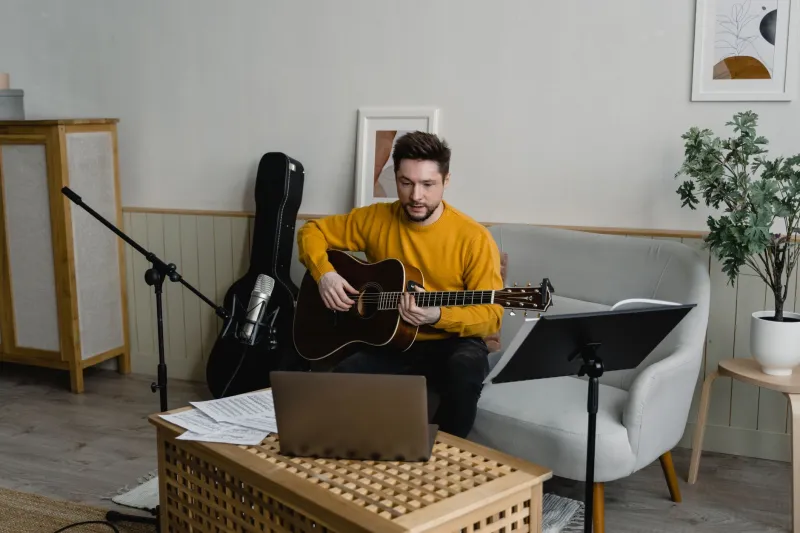
Not long ago, making it in music meant one thing: getting signed. You needed the A&R guy to notice you, the label to back you, and the radio station to spin you. The whole ecosystem was built around gatekeepers — and if you couldn't get past them, you were basically playing open mics forever and hoping for a miracle.
That world is gone. And honestly? Good riddance.
In 2024, the most exciting thing happening in American music isn't coming out of some corporate boardroom in midtown Manhattan. It's coming out of home studios in Atlanta, living rooms in Phoenix, and tiny apartments in Chicago where artists are building real, loyal, financially sustainable careers entirely on their own terms. No label. No middleman. No permission required.
This is the independent artist era — and at Ronnieland, where we've always believed in the power of authentic creative expression, we are here for every single second of it.
The Platform Revolution Changed Everything
Let's start with the obvious: the tools available to independent musicians today are genuinely staggering. Spotify, Apple Music, Amazon Music, and Tidal have collectively made it possible for any artist to distribute music globally for a fraction of what it once cost. Services like DistroKid, TuneCore, and CD Baby have eliminated the need for a label deal just to get your music on streaming platforms.
But distribution was only the beginning. The real game-changer has been social media — specifically, the rise of short-form video content.
"TikTok literally built my career," says Marcus, a 26-year-old R&B and neo-soul artist based in Houston who asked to go by his first name. "I put out a sixty-second clip of me playing a chord progression I'd been messing with, just talking through what I was feeling that day, and it hit half a million views in a week. That led to my first 10,000 Spotify followers. No label was involved in any of it."
Marcus's story isn't unusual. In 2024, TikTok, Instagram Reels, and YouTube Shorts have become the new radio — except instead of a program director deciding what gets heard, the algorithm responds to engagement, authenticity, and consistency. Artists who understand this aren't just posting music. They're posting themselves.
Authenticity Is the New Marketing Strategy
Here's a shift that would have seemed counterintuitive even ten years ago: in the current landscape, being real is more valuable than being polished.
Fans in 2024 don't just want to hear your music. They want to know who you are when you're not performing. They want the behind-the-scenes footage. They want to watch you struggle with a song that isn't working yet. They want to feel like they're part of the process — not just consumers of a finished product.
"I post my failures just as much as my wins," says Deja, a 23-year-old indie pop songwriter from Nashville who has amassed over 200,000 followers across platforms without ever releasing through a major label. "I posted a video once of me crying because a song I worked on for three months just wasn't coming together. That video got more comments and shares than anything I'd ever posted. People were like, 'I feel this so much.' That's when I realized — the connection is the content."
This principle aligns with what social media researchers call parasocial relationship building — the phenomenon where audiences develop a genuine sense of personal connection with creators they follow online. For musicians, this is gold. A fan who feels personally connected to an artist is dramatically more likely to stream their music, buy merchandise, show up to a show, and tell their friends.
Streaming Strategy: More Than Just Uploading
Getting your music onto Spotify is table stakes. What separates artists who plateau at a few hundred monthly listeners from those who build genuine streaming careers is strategy.
Playlist placement remains one of the most powerful growth levers available. Getting featured on a Spotify editorial playlist — even a smaller, genre-specific one — can expose your music to thousands of listeners who've never heard of you. Independent artists are increasingly learning to pitch their releases directly to Spotify's editorial team through the Spotify for Artists dashboard, often weeks before a release date.
Beyond editorial playlists, savvy independent artists are cultivating relationships with independent playlist curators — regular people who have built followings around specific moods or genres and who are often far more accessible than any label's promo team.
"I spent two months just researching and reaching out to playlist curators in my genre," says Terrell, a 28-year-old hip-hop producer and artist from Detroit. "Personalized emails, genuine compliments on their playlists, no copy-paste garbage. I got placed on about fifteen playlists, and my monthly listeners went from 800 to almost 40,000 in about four months. It's a grind, but it works."
Building the Brand Beyond the Music
The artists who are truly winning in the independent space understand something crucial: the music is the foundation, but the brand is the house.
Your brand as an independent artist is the sum total of everything a fan experiences when they interact with you — your visual aesthetic, your communication style, your values, the stories you tell, the causes you champion. In a marketplace flooded with talented musicians, brand clarity is often what makes the difference.
This doesn't mean manufacturing a persona. In fact, the most effective artist brands in 2024 are the ones that feel like natural extensions of who the person actually is. The goal is to identify what makes you genuinely different — your specific perspective, your particular combination of influences, your unique story — and then find consistent, creative ways to communicate that across every platform.
"I'm a Black woman making country music," says Simone, a 25-year-old artist from rural Mississippi now based in Nashville. "That is my story and my brand. I lean into it completely — the tension, the history, the joy of it. People who connect with that connect hard. My community is small but it's incredibly loyal. I'd rather have 5,000 fans who would follow me anywhere than 500,000 passive streamers."
Simone's point about community quality over quantity is one that comes up again and again in conversations with successful independent artists. Email lists. Discord servers. Patreon memberships. These direct-to-fan channels, where artists can communicate with their audience without an algorithm in the way, are increasingly seen as the most valuable assets an independent musician can build.
The Ronnieland Angle: Where Authenticity Meets Amplification
At Ronnieland, this whole movement speaks directly to what we're about. Music, authenticity, creative control, and the belief that the best stuff comes from people who are doing it because they genuinely love it — not because a corporation greenlit it.
The independent artist ecosystem and the Ronnieland community are natural allies. We're all operating outside the traditional structures, building something real from the ground up, and betting on connection over calculation.
If you're an independent artist reading this: your story matters. Your weird, specific, deeply personal artistic vision is exactly what audiences are hungry for in a world full of manufactured content. The tools are there. The audience is there. The playbook is being written right now, by people just like you.
Practical Moves for Artists Ready to Level Up
Before we wrap this up, here's the condensed version for anyone ready to start building:
Release consistently, not perfectly. The algorithm rewards frequency. A good song released regularly beats a perfect song released once a year.
Document everything. Your creative process is content. Your journey is content. Your personality is content. Show up on video regularly.
Own your audience. Build an email list from day one. Social platforms can change their algorithms or disappear. Your email list is yours forever.
Collaborate strategically. Feature swaps with artists in adjacent genres expose you to new audiences without any ad spend required.
Treat your music like a business. Register with ASCAP or BMI. Understand your royalty streams. Know your numbers. Creative freedom is a lot easier to maintain when you're financially sustainable.
The music industry isn't dying. It's decentralizing. And for artists with something real to say, that's the best news in the history of the business.
Welcome to Ronnieland. This is where the real ones play.