Know Thyself, Own the Room: Why the Most Magnetic Entertainers Never Apologize for Being Exactly Who They Are
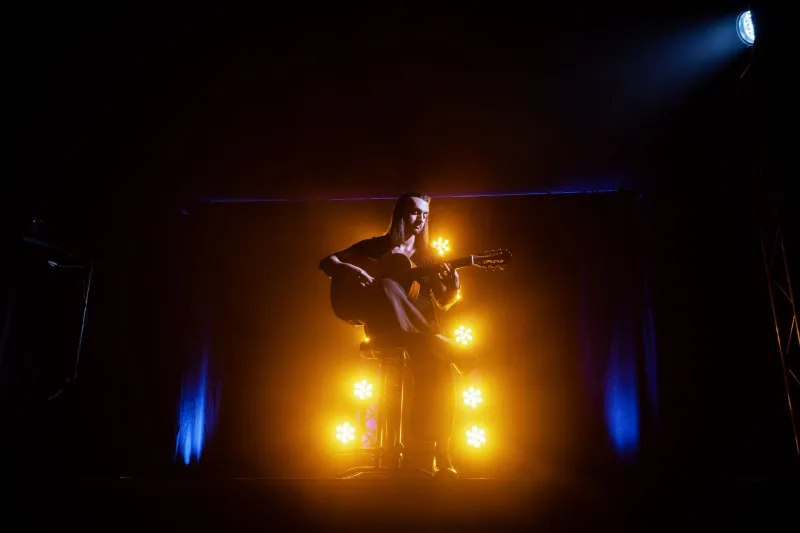
There's a moment in every great entertainer's career where they face a fork in the road. One path says: soften the edges, broaden the appeal, play it safe. The other path says: go deeper into the thing that makes you weird, specific, and undeniably you. The ones who chose that second road? Those are the people we're still talking about.
Welcome to Ronnieland, where we've always believed that good vibes start with being real. And nothing is more real than an entertainer who has done the hard internal work of figuring out exactly who they are — and then had the audacity to show up that way, every single time.
The Trend Chasers vs. The Standard Setters
Let's be honest about something. The internet has made it incredibly easy to watch what's working for someone else and try to copy the formula. A comedian sees a style of observational humor blowing up on Instagram Reels, so they pivot. A producer notices a particular trap sound dominating the charts, so they clone it. The result? A feed full of content that feels like it was made by the same person — a person who doesn't actually exist.
Contrast that with someone like Dave Chappelle, who walked away from $50 million in 2005 because the work stopped feeling true to him. At the time, a lot of people called that crazy. In retrospect, it's one of the most powerful personal branding moves in entertainment history. When he came back, audiences didn't just show up — they showed up hungry, because they knew they were getting something that couldn't be manufactured.
Or look at Tyler, the Creator. Here's an artist who built his entire early career on being deliberately alienating to anyone who wasn't paying close enough attention. He didn't soften his aesthetic to fit radio. He didn't round off the corners to land a mainstream deal faster. He went so far into his own world that the world eventually had to come find him — and when it did, it handed him a Grammy.
What Self-Awareness Actually Looks Like in Practice
Now, when we say self-awareness, we're not talking about being navel-gazing or precious about your "artistic vision." We're talking about something much more practical: knowing your strengths, owning your quirks, and understanding the specific emotional frequency you operate on — then broadcasting that frequency without apology.
Comedians who have mastered this don't walk onstage wondering what the audience wants to hear. They walk out knowing exactly what they want to say, and they trust that the right people will connect with it. Nicki Glaser didn't become one of the most respected voices in stand-up by watering down her point of view. She leaned into the uncomfortable, the personal, the ruthlessly specific — and built a fanbase that feels like they personally know her.
Musicians operate the same way. Kendrick Lamar's entire catalog is basically one long, deeply personal psychological excavation. It's not designed to be for everybody. And that's precisely why it matters to the people it's for.
The Audience Can Smell a Fraud From a Mile Away
Here's the thing about 2024 audiences — they are sharp. They've grown up watching reality TV that turned out to be scripted, following influencers who turned out to be sponsored, and streaming music that turned out to be label-engineered. They have finely tuned fraud detectors, and those detectors are always running.
When someone comes along who is genuinely, unambiguously themselves — who references the same three things in every interview because those three things actually matter to them, who tells the same kind of jokes because that's how their brain actually works — audiences feel it. And that feeling is rare enough in 2024 that it creates an almost magnetic pull.
This is what we'd call the Ronnieland principle: the more specifically yourself you are, the more universally people can connect with the feeling of your authenticity, even if they don't share your exact experience.
Why Doubling Down Beats Diluting Every Time
There's a counterintuitive truth hiding inside every successful entertainer's story: the narrower you go, the wider your eventual reach. It sounds backwards. It goes against every instinct that says more people = more appeal = more success. But the data — and honestly, just the vibes — don't support that logic.
Bo Burnham didn't make Inside for a mass audience. He made it for people who were drowning in pandemic isolation and had complicated feelings about the internet and creativity and mental health. That's a specific group. Except that specific group turned out to be enormous, because specificity resonates in a way that vague, everyone-friendly content simply cannot.
Jack Harlow built his whole early brand around being the charming, slightly cocky kid from Louisville who loved basketball and wasn't afraid to be funny. He didn't try to be a different kind of rapper. He was relentlessly, almost stubbornly himself — and it worked.
The Takeaway From Ronnieland
If you're building something — a music project, a comedy set, a brand, a vibe — the single most valuable investment you can make isn't in equipment or marketing or networking. It's in the unglamorous, uncomfortable work of figuring out who you actually are and what you actually have to say.
Because the entertainers who last? They're not the ones who chased the algorithm. They're the ones the algorithm eventually had to chase.
Know yourself. Then show up as that person, loudly and without apology. The right audience will find you. And when they do, they'll stay.