The Slow Burn Joke: Why Your Brain Gets Funny on a 10-Minute Delay — and How to Use That Against People
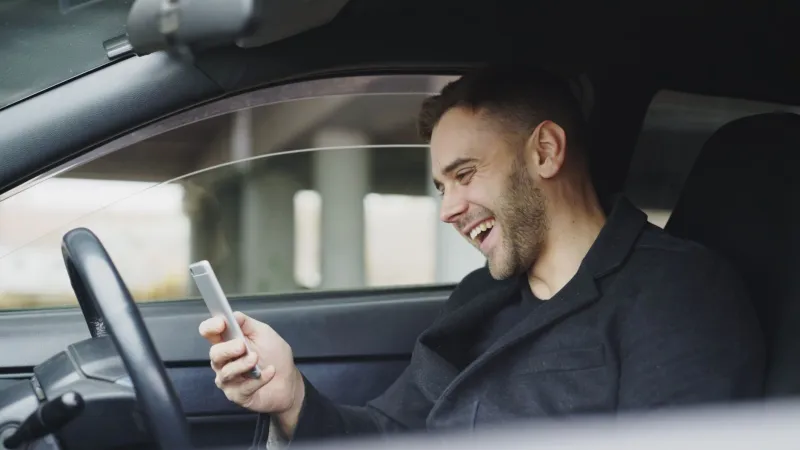
Picture this: you're sitting in a comedy show, a dinner party, or a group chat that's gotten out of hand. Someone says something. The room moves on. You nod politely. You maybe even contribute to the next topic. And then — ten, fifteen, twenty minutes later — it hits you. Whatever that person said was hilarious, and your brain just now got around to processing it.
You laugh. Alone. Possibly in a car. Possibly at a red light. And the person who made the joke will never know they landed it.
This is not a personal failing. This is your brain doing something genuinely interesting. And once you understand why it happens, you'll never experience a delayed laugh the same way again.
Your Brain Is Not a Laugh Track
Here's the thing people forget about humor: it's cognitively expensive. A joke, at its mechanical core, is a setup that establishes an expectation and then a punchline that violates it in a surprising but logical way. Your brain has to process the setup, hold it in working memory, register the violation, evaluate whether the violation makes sense, and then — if all those boxes get checked — it rewards you with laughter.
For a fast, obvious joke, that process takes milliseconds. But for a layered joke — one with a callback, a subtle subversion, or a reference that requires you to connect two things that don't seem connected — the processing time can be significantly longer. Your conscious mind moves on to the next thing while your subconscious keeps quietly working the puzzle in the background.
And then: click. The pieces lock together. You get it. And you laugh, alone, like a person who is definitely fine.
Researchers studying humor and cognition have found that the "aha" moment of getting a joke activates similar neural pathways to problem-solving breakthroughs. Essentially, your brain treats a good slow-burn joke like a little mystery it just solved. The delay isn't a bug — it's a feature. It means the joke was genuinely complex enough to require actual mental work.
The Comedians Who Already Know This
If you've ever watched a special and found yourself laughing at a callback you almost forgot about, you've been on the receiving end of a deliberately long fuse. Great comedians — the ones who are playing chess while everyone else is playing checkers — plant jokes early in a set that don't fully detonate until much later.
Mitch Hedberg was a master of this in a different way: his one-liners were so densely constructed that the laugh sometimes came a beat or two after the punchline because your brain needed that extra half-second to catch up. Audiences would laugh, and then laugh again harder when they actually processed what they'd just heard.
In sketch comedy, the slow burn is practically its own genre. A throwaway line in the cold open becomes the funniest thing in the episode by the time it pays off in the final scene — not because it was obvious, but because the writers trusted the audience to hold onto it. That trust is actually a form of respect. They're saying: we think you're smart enough to get this later.
Content creators on social media have started reverse-engineering this deliberately. Videos that plant a visual gag or a throwaway comment in the first five seconds and then return to it at the end get rewatched more, shared more, and commented on more. Why? Because the delayed payoff feels like a reward. People want to show other people. "Did you catch the thing at the beginning?" is the digital equivalent of turning to someone in the audience and going, "Wait — did you just get that?"
How to Plant a Joke With a Long Fuse
Okay, so here's where this gets actually useful. Whether you're a comedian, a content creator, a person who wants to be more interesting at parties, or just someone who appreciates having a competitive advantage in group chats — the slow burn is a learnable skill. Here's how to think about it.
Establish the thing early, casually. The key to a long-fuse joke is that the setup can't feel like a setup. It has to land like a throwaway observation, a random detail, a nothing-burger of a comment. If people sense the setup, they'll be waiting for the punchline and the delay loses its power.
Let the room breathe. Don't rush back to it. The whole point is the gap. Talk about other things. Let people genuinely forget. The longer the fuse, the bigger the explosion when it goes off — as long as the callback is airtight.
Make the callback inevitable in retrospect. The best delayed laughs are the ones where, the moment you get it, you immediately think of course. The connection has to make sense. It can't be random or forced. The delay only feels satisfying if the payoff was worth the wait.
Use specificity as your secret weapon. Vague jokes age poorly and travel slowly. Specific, weird, precise details stick in the memory longer and make the callback hit harder. "A guy" is forgettable. "A guy in a Crocs-and-dress-socks combo" is a detail your brain files away.
The Delayed Laugh as a Sign of Respect
There's one more thing worth saying here. When you laugh at something ten minutes after it happened — when you're alone in the car or staring at your ceiling or mid-bite of something you almost choke on — that delayed laugh is arguably the most genuine one. Nobody's watching. There's no social pressure to perform amusement. Your brain just found something genuinely funny and told your body about it.
That's the purest laugh there is. And the comedians who can plant that kind of laughter? They're operating on a completely different level.
So next time you crack up alone, twenty minutes after the fact — give credit where it's due. Someone played a long game on you. And they won.
Ronnieland: where the jokes land eventually, the vibes are always good, and nobody judges you for laughing alone in your car. You're among friends here.