Your Brain at 3 AM Is Basically a Genius Who Refuses to Work Normal Hours
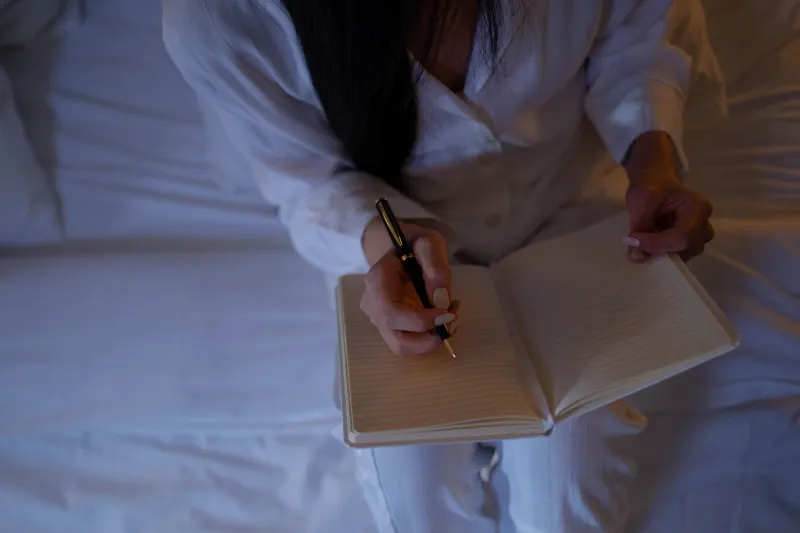
It happens to every single creative person alive. You've done everything right. You sat at your desk from noon to four, notebook open, coffee hot, playlist queued up. You stared at a blank page so hard it should have burst into flames. Nothing. Crickets. A tumbleweed of inspiration rolling lazily through your skull.
Then you crawl into bed at 11:47 PM, close your eyes, and your brain goes: Hey, quick question — what if the chorus went like this?
Suddenly you're scrambling for your phone in the dark, knocking over a water glass, desperately trying to record a voice memo before the idea evaporates like morning dew on a hot Tennessee sidewalk. If you're a musician, you've been there. If you're a comedian, you've absolutely been there — except it's a punchline so sharp you'd swear someone else wrote it and slipped it into your subconscious while you were dozing off.
Welcome to the 3 AM creative breakthrough. It's annoying, it's inconvenient, and it might actually be the most important thing your brain does all day.
Why Your Brain Saves the Good Stuff for Bedtime
Here's the science, minus the textbook vibes. During the day, your prefrontal cortex — the bossy, logical part of your brain — is running the whole show. It's filtering ideas, second-guessing your instincts, reminding you that a song about losing your car keys in a Walmart parking lot probably won't go platinum. It's useful! But it's also the reason you sit at your desk for four hours and produce exactly nothing worth keeping.
As you wind down toward sleep, that prefrontal bouncer starts nodding off. Your brain shifts into what researchers call a hypnagogic state — the dreamy, floaty zone between full consciousness and sleep. In this state, your mind starts making connections it would normally reject as too weird, too risky, or too far outside the box. Neurologists call it "diffuse thinking." Creative people call it Tuesday night at 3 AM.
Salvador Dalí allegedly used to nap in a chair holding a key above a metal plate so the clang of it dropping would wake him right at the edge of sleep — just to capture whatever wild imagery his brain was cooking up. Paul McCartney famously woke up with the melody to "Yesterday" fully formed in his head and spent days asking people around him if they'd heard it before, convinced it couldn't possibly be original. Your favorite comedian probably has a notes app full of bits that arrived in that same fuzzy, half-dreaming space.
Your brain isn't slacking during the day. It's loading. And at 3 AM, it finally hits send.
The Tragic Death of a Midnight Idea (And How to Stop It)
Here's the brutal truth: most of those lightning-strike ideas die before morning. You tell yourself you'll remember it. You absolutely will not remember it. The human brain, bless its heart, is terrible at storing unanchored information during sleep transitions. That killer hook? Gone. That twist ending to the bit? Replaced by a vague memory that you thought of something good.
The fix is embarrassingly simple, and yet most people still don't do it consistently: capture everything immediately, no matter how rough it is.
Keep your phone on your nightstand with a voice memo app ready to go — not buried three swipes deep, not requiring a passcode. One tap, record, done. Don't try to refine it. Don't try to explain it. Just mumble the idea out loud in whatever half-coherent state you're in. Your future self, sitting in daylight with coffee, will thank your past self for even the messiest 14-second voice memo.
If you're more of a pen-and-paper person, keep a dedicated small notebook and a pen that actually works (we all have that one pen that betrays us in the dark) on your nightstand. The physical act of writing can also help lock the idea into memory more effectively than typing, but honestly — whatever gets the idea out of your head and into the world works.
Building a Creative System That Actually Fits Your Brain
Capturing the idea is step one. The bigger move is building a system around your brain's natural creative rhythms so you stop fighting yourself and start working with the weird, nocturnal genius living inside your skull.
Step one: Track your creative peaks. For one week, just notice when ideas actually show up. Is it in the shower? On a long drive? Right before bed? Most people discover they have one or two reliable "golden windows" — times when their brain is naturally more generative. Stop trying to force creativity during the dead zones and start protecting those golden windows like they're concert tickets you paid too much for.
Step two: Build a low-friction capture habit. The enemy of midnight ideas is friction. Anything that makes capturing an idea harder than two seconds means the idea dies. Simplify your setup ruthlessly. One app. One notebook. One system. Consistency beats perfection every single time.
Step three: Schedule a daily "idea review." Every morning, spend ten minutes going through whatever you captured the night before. This is where the magic gets sorted. Some of those 3 AM voice memos will sound like absolute nonsense in daylight — and that's fine, that's the filter working. But some of them will still spark something real. Those are the ones you develop.
Step four: Don't develop ideas at 3 AM. This is the trap. You wake up with a great idea and immediately try to write the whole song or flesh out the entire bit right there in the dark. Now you can't fall back asleep, you're exhausted the next day, and the idea still isn't finished. Capture it, then let it rest. Your rested, daylight brain is better at building structure. Your midnight brain is better at discovery. Use them for what they're each actually good at.
The Late-Night Creative Club You're Already In
Here's the part nobody tells you when you're starting out as a musician or comedian: the fact that your brain does this weird midnight lightning thing isn't a quirk or a flaw. It's a feature. It means you're creative enough that your subconscious is still working on problems even when you've clocked out for the day.
The artists who break through aren't necessarily the ones with the most talent in the room. They're often the ones who figured out how to catch more of those ideas — and then actually do something with them the next morning.
So the next time you're lying there at 3 AM and your brain decides to serve up something that feels like it might actually be great, don't be annoyed. Grab your phone, hit record, whisper the idea like you're leaving a voicemail for your future career, and go back to sleep.
The morning version of you has got it from here.
And hey — welcome to Ronnieland, where the best ideas show up fashionably late and we keep the recording light on just in case.