Press Play Together: How a Shared Playlist Can Become the Soundtrack of a Lifetime
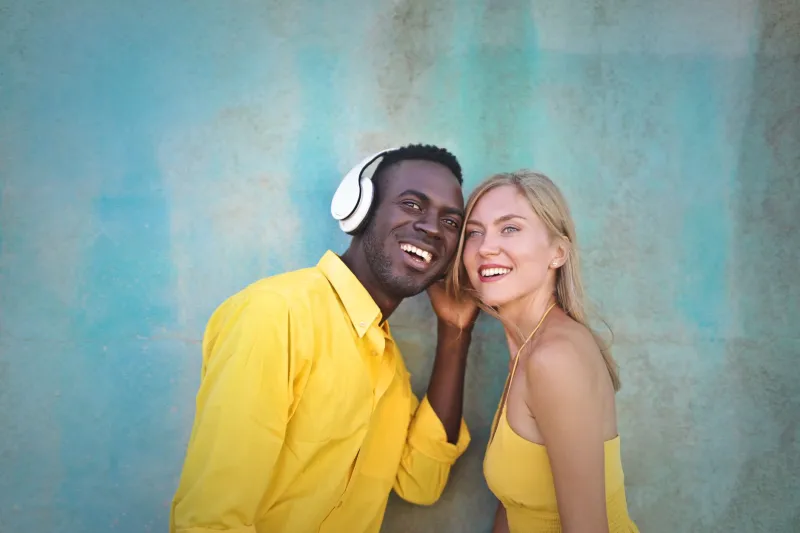
Let's be honest. You have a song. Maybe it's something embarrassing — a mid-2000s pop banger you'd never admit to loving in polite company. But the second it comes on, your brain doesn't go to the music video or the Grammy performance. It goes straight to that person. That road trip. That kitchen dance party at 2 a.m. with your college roommate who now lives three time zones away.
That's not a coincidence. That's the friendship playlist effect in action, and it's more powerful than most of us ever stop to appreciate.
Music Is a Memory Machine (And Your Friends Are the Engineers)
Here's something your brain is doing that you didn't sign up for: every time you hear a song in an emotionally charged moment — joy, heartbreak, the specific chaos of a Friday night with your people — your hippocampus is quietly filing it away like the world's most sentimental librarian. Psychologists call this the "reminiscence bump" effect when it applies to life stages, but on a micro level, it's happening constantly. Music heard during peak social moments gets encoded with the emotional fingerprint of whoever you were with.
This is why the Spotify playlist you and your best friend built during that summer road trip through the Southwest hits different than anything you'd curate alone. You weren't just adding songs. You were building a shared emotional archive, one track at a time.
Researchers at the University of Cambridge have found that musical bonding — specifically the act of experiencing music together — triggers oxytocin release, the same chemical responsible for trust and social connection. In plain terms: listening to music with someone you care about is literally making you more bonded to them on a biological level. Your playlist is basically couples therapy, but with better production value.
The Collaborative Playlist Is the New Love Language
Remember when making someone a mixtape was the ultimate romantic gesture? You'd agonize over track order, flip the cassette at just the right moment, maybe write the song titles in your neatest handwriting on the J-card insert. The collaborative Spotify playlist is that mixtape's digital descendant, and it hits just as hard.
When two people build a playlist together, something subtle but significant happens: they're negotiating taste, sharing vulnerability, and creating a joint identity. You're not just saying "I like this song." You're saying "I want you to know this part of me." And when the other person adds something back, they're doing the same thing.
Friendship playlists operate on the same frequency. The group chat playlist that started as a joke and somehow became the official soundtrack to every hangout? That thing has lore. There are songs on it that nobody remembers adding, songs that got vetoed in a near-civil-war, and at least one track that became an inside joke so layered it would take an hour to explain to an outsider.
That's not just a playlist. That's a relationship document.
Concert Buddy Culture: Why Who You Go With Matters as Much as Who's Performing
Ask anyone about the best concert they've ever been to, and pay attention. They'll probably start with the artist, sure — but within thirty seconds, they'll be talking about the people they were with. Who they screamed the lyrics with. Who cried during the slow song. Who got separated in the crowd and somehow found each other right before the encore like something out of a movie.
Concert experiences are uniquely powerful relationship markers because they're immersive. You're sharing sound, physical space, emotional peaks, and a collective sense of "we are all here for this, right now, together." There's no scrolling. There's no multitasking. For two hours, you and your people are locked in.
It's no accident that concerts are where friendships get cemented, where couples fall harder, where estranged siblings suddenly remember why they used to be close. The music creates a container for connection that everyday life rarely provides.
In fact, a 2023 Eventbrite survey found that over 70% of Americans say live music events are among their most meaningful shared experiences — ranking higher than dinner parties, sports events, and even some holidays. Your Beyoncé Renaissance tour memory isn't just a flex. It's a relationship milestone.
The Songs That Outlive the Relationship
Of course, the friendship playlist effect cuts both ways. Because music is such an efficient emotional anchor, it can also serve as a haunting reminder of people who are no longer in your life the same way. The breakup song that was actually playing during the breakup. The song you and your ex used to sing in the car. The track that was your best friend's favorite before you two drifted apart.
Here at Ronnieland, we're all about the good vibes — but we're also real about the fact that music's power doesn't discriminate based on whether the memory is happy or complicated. If anything, those bittersweet songs prove the point even harder: the music mattered because the person mattered.
The good news? New music is always being made. New playlists are always being started. And somewhere out there, a song is playing right now that's about to become the song for you and someone you haven't even met yet.
How to Be More Intentional About Your Musical Bonds
So what do you do with all this information? A few ideas:
Start a shared playlist with intention. Pick a person — a best friend, a partner, a sibling — and start a collaborative playlist with the explicit goal of documenting your relationship through music. Add songs that remind you of them. Add songs from moments you've shared. Let it grow weird and sprawling and completely unlistenable to anyone who isn't you two.
Go to more live music together. It doesn't have to be a stadium tour. A local venue, a free outdoor concert, a basement show in someone's neighborhood — the shared experience is what counts.
Actually talk about the music. When a song comes on that reminds you of someone, tell them. "This song makes me think of that time we..." is a sentence that costs nothing and means everything.
Music has always been described as a universal language, but maybe that's not quite right. It's more like a personal language — one that becomes richest when spoken between people who know each other well enough to fill in the spaces between the notes.
Press play. And make sure someone you love is in the room when you do.