Bedroom Beats, Billboard Dreams: How Producers With Laptops Are Running the Music Game in 2024
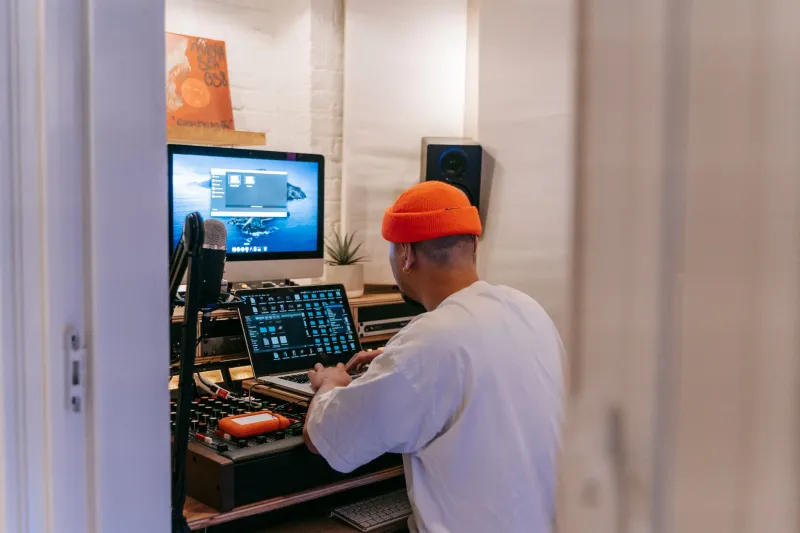
Somewhere in America right now, a 19-year-old is sitting in their childhood bedroom at 2 a.m., headphones on, tweaking a hi-hat pattern on a $300 laptop, and making something that's going to end up in your playlist before the year is out. No label. No A&R meeting. No handshake deal in a glass tower on Music Row. Just talent, tools, and an internet connection.
This is the bedroom producer revolution, and if you haven't been paying attention, you've been sleeping on the most disruptive shift in music since the electric guitar showed up and made everyone rethink what a band could sound like.
Here in Ronnieland, music is literally part of the DNA — so we had to dig into what's actually happening, who's making it happen, and what it means for the future of the art form we all love.
The Technology That Blew the Door Off Its Hinges
Let's start with the tools, because none of this happens without them.
Twenty years ago, getting professional-sounding audio required a professional studio — which meant real money, real gatekeepers, and real access that most people simply didn't have. The cost of entry kept the circle small and the power concentrated at the top.
Then something changed. Digital Audio Workstations — DAWs, if you want to sound like you know what you're talking about at a dinner party — became both affordable and genuinely powerful. Programs like FL Studio, Ableton Live, and GarageBand put production tools in the hands of anyone who wanted them. A license that once would have cost thousands now runs a few hundred bucks, and GarageBand ships free on every Mac.
Add in the explosion of affordable audio interfaces, studio-quality headphones under $150, and a YouTube tutorial ecosystem that will teach you literally anything, and the knowledge gap that once protected the professional studio world effectively collapsed.
The result? A generation of producers who learned everything they know from the internet, built their workflow in their bedroom, and never once needed permission from anyone inside the industry.
From SoundCloud to the Charts: The New Pipeline
The tools only tell half the story. The other half is distribution — and streaming platforms changed that game just as completely.
Services like DistroKid and TuneCore let independent artists upload music directly to Spotify, Apple Music, Tidal, and every other major platform for a flat annual fee. No label deal required. No middleman taking 80% of your royalties. Just upload, distribute, and let the algorithm do its thing.
And the algorithm, it turns out, doesn't care who your manager is.
Producers and artists who built audiences on SoundCloud, YouTube, and TikTok discovered that a loyal fanbase translates directly to streams, and streams translate directly to playlist placements, and playlist placements translate directly to the kind of visibility that used to require a major label's marketing budget. The pipeline from bedroom to listener has never been shorter.
TikTok in particular has become a launching pad that no one in 2015 could have predicted. A 15-second clip of a beat, a snippet of a hook, a behind-the-scenes look at the production process — any of these can catch fire and send hundreds of thousands of people searching for the full track. Artists have gone from zero to hundreds of thousands of monthly listeners on Spotify in a matter of weeks, all because a single video hit the For You page at the right moment.
The Producers Actually Making It Happen
The names doing this work in 2024 aren't all household names yet — but some of them are getting there fast.
Take the wave of lo-fi and bedroom pop producers who built massive audiences on YouTube and Spotify without a single industry co-sign. Artists in the hyperpop and DIY R&B spaces have been releasing music that sounds genuinely polished and emotionally resonant, all produced in spaces that would make a traditional studio engineer wince — mattresses against walls, blankets over windows, a keyboard balanced on a dresser.
What they lack in square footage, they make up for in creative freedom. Without a label dictating release schedules, sonic direction, or commercial viability, bedroom producers can experiment in ways that signed artists often can't. That freedom produces weird, interesting, genre-defying music — which, not coincidentally, is exactly the kind of music that tends to connect with younger audiences who are tired of everything sounding the same.
The Hustle Is Still Real
Let's not romanticize this so much that we pretend it's easy, though. The democratization of music production means the competition is also more intense than it's ever been. Tens of thousands of tracks are uploaded to streaming platforms every single day. Getting heard in that environment requires more than just making something good — it requires a strategy.
The bedroom producers who break through tend to share a few traits. They're consistent — releasing music regularly rather than waiting for the perfect moment. They're community-minded — building genuine relationships with listeners and other creators rather than just broadcasting into the void. And they're multi-platform — understanding that the music is the product but the content around the music is the marketing.
Behind-the-scenes production videos. Beat breakdowns. Collab sessions streamed live. Sample flips posted as Reels. The most successful bedroom producers treat their creative process as content, and in doing so, they build audiences that follow them as artists rather than just streaming individual tracks.
What This Means for the Music You Love
The bedroom producer revolution isn't just a story about technology or hustle. It's a story about who gets to make music and who gets to be heard.
For decades, the industry's infrastructure determined which voices reached the mainstream. Gatekeepers decided what was commercially viable, what fit the format, what sounded right for radio. A lot of extraordinary music never made it through that filter — not because it wasn't good, but because it didn't fit the machine.
That filter is breaking down. The music coming out of bedrooms in 2024 is diverse in genre, in geography, in background, in perspective. It sounds different because it comes from different places and different people than the music the traditional industry was built to amplify.
And honestly? That's the most exciting thing happening in music right now. Not the stadium tours, not the catalog acquisitions, not the streaming wars. It's the kid in a spare bedroom with a laptop and a vision, making something that didn't exist yesterday.
In Ronnieland, we've always believed the music finds you when it's supposed to. In 2024, it's finding more people than ever — and it's coming from places nobody expected. That's not a disruption. That's a renaissance.