Mic Drop to Track Drop: Why Comedians Are Suddenly Taking Over the Music Charts
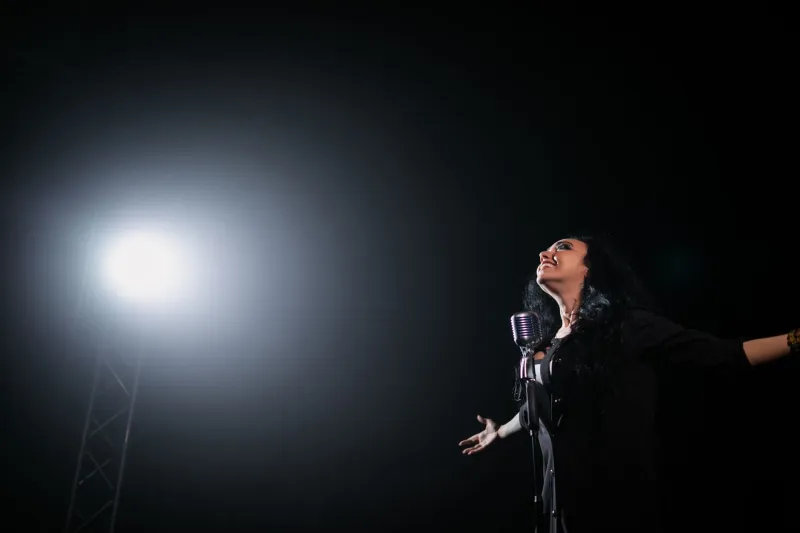
Let's set the scene. You're scrolling through your favorite music app, looking for something new to vibe to, and suddenly you see it — an album from someone whose last project was a Netflix special about their mom's cooking. You blink. You look again. Yep, that's definitely a comedian with a tracklist. And here's the kicker: it actually slaps.
Welcome to 2024, where the boundaries between comedy and music have basically dissolved like sugar in hot coffee. The crossover isn't just happening — it's accelerating, and it's producing some of the most authentic, unpredictable content in the entire creator economy right now.
The Funny People Were Always Musical (We Just Weren't Paying Attention)
Here's a truth that music snobs and comedy purists both need to sit with: the skills that make someone hilarious on stage are frighteningly similar to what makes someone magnetic behind a microphone in the booth.
Timing. Rhythm. The ability to read a room. Knowing exactly when to deliver the punchline — or the hook. Stand-up comedy and songwriting have been kissing cousins since forever, but the creator economy finally gave both worlds a reason to stop pretending they're strangers at a party.
Take Lil Dicky, who built an entire rap career on the foundation of comedy. His track Freaky Friday featuring Chris Brown didn't just go platinum — it went viral in a way that felt more like a sketch than a song. Or look at Bo Burnham, whose Netflix special Inside blurred the line so completely between musical performance and comedic commentary that critics couldn't even agree on what genre to file it under. Spoiler: it won a Grammy nomination. That's not an accident.
What Skills Actually Transfer?
If you ask industry insiders what makes these crossovers work, the answer almost always comes back to one word: authenticity.
"Comedians are trained to be vulnerable in front of strangers," says one entertainment consultant who works with both touring musicians and stand-up acts. "That vulnerability — that willingness to say something true and weird and personal — is exactly what makes a song connect. It's the same muscle."
And that muscle, it turns out, has been getting a serious workout in the age of social media. Platforms like TikTok and Instagram Reels don't care whether you're funny or musical. They care whether you're real. The creators who understand that are the ones blowing up, regardless of which lane they started in.
Comedy writers are discovering that a well-crafted verse requires the same compression as a great joke — maximum meaning in minimum words. Musicians are realizing that a great between-song story told on stage can keep an audience just as locked in as the actual setlist. The disciplines are teaching each other.
Real Examples That Prove This Isn't a Fluke
Let's talk receipts, because this isn't just a theory — it's a full-blown trend with data behind it.
Nicki Minaj has leaned into comedic delivery on tracks for years, and her social media presence is essentially a comedy channel with rap interludes. Childish Gambino — Donald Glover to his TV fans — built a career that zigzags between stand-up, acting, and music so fluidly that trying to put him in a box is basically a fool's errand. His This Is America wasn't just a banger; it was a piece of social commentary that landed with the precision of a perfectly timed punchline.
On the comedy side, Druski has gone from being the funniest guy in rap videos to having legitimate industry relationships that blur the line between comedian and music industry player. Katt Williams, whose recent interview on Club Shay Shay broke the internet, has always used musical structure in his comedy sets — the callbacks, the crescendos, the dramatic pauses that hit like a bass drop.
Even newer voices are getting in on it. Comedians are dropping lo-fi projects on SoundCloud. Musicians are doing five-minute comedy sets before their shows. The pipeline flows in both directions.
Why Audiences Are Here for All of It
Here's what makes this whole thing make sense from a fan perspective: people are tired of being put in boxes, so naturally they're tired of their favorite creators being put in boxes too.
The modern entertainment consumer — especially in the US, where we basically invented the concept of multi-hyphenate celebrity — wants to follow a person, not a product category. When you love a comedian's brain, you want to know what their music sounds like. When you're obsessed with an artist's vibe, you want to hear them be funny. It's the same curiosity that makes you want to know what your favorite athlete eats for breakfast.
Social media made this possible by collapsing the distance between creator and audience. A comedian can drop a freestyle on Instagram Live at midnight and have 200,000 views by morning. A musician can post a comedic skit between album cycles and keep their fanbase warm without releasing a single note of new music. The audience rewards versatility because versatility feels human.
The Ronnieland Take: This Is Just Entertainment Growing Up
Look, at the end of the day, what we're really watching is entertainment maturing into something more honest. The old industry model wanted you to be one thing — a comedian OR a musician — because it was easier to market, easier to package, easier to sell.
But creativity doesn't work like that. Never did. The funniest people you know probably have a playlist that would make you cry. The musicians who move you most are probably hilarious in real life. The wall between those two worlds was always a little bit fake.
What the creator economy did — what platforms and streaming and social media did — is hand people a sledgehammer and say, "Go ahead. Knock it down."
And they did. With a smile on their face and a beat in the background.
So the next time your favorite comedian drops a project that sounds suspiciously like an album, don't be shocked. Don't be confused. Just press play. Because in Ronnieland — and honestly, in the whole entertainment landscape right now — the only rule is that the best storytellers win. Whether they're telling it with a punchline or a melody is just a detail.
The mic drop and the track drop? Same energy. Always was.