Nobody Warned You About Second Zero: The Brutally Honest Truth About Those First 60 Seconds Onstage
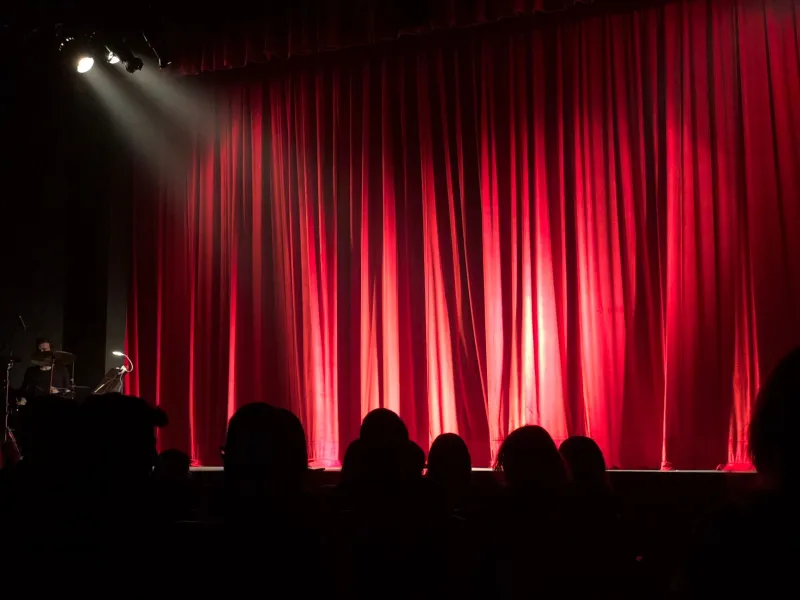
Let's talk about something nobody puts in the brochure when you decide to become a performer.
Not the stage fright — everybody warns you about that. Not the nerves backstage, not the shaky hands, not the voice that decides to go up three octaves right when you need it most. No, the thing nobody prepares you for is what happens after you walk out. That specific, almost supernatural silence between the moment the crowd sees you and the moment they decide how they feel about you.
Call it Second Zero. It lasts maybe sixty seconds. It feels like three business days.
Here at Ronnieland, we're all about good vibes — but good vibes don't mean pretending the hard parts aren't real. And this? This is one of the realest, most psychologically fascinating corners of the entire performance world.
The Science of Why That Silence Hits Different
Here's what's actually going on in your audience's brain during those opening moments: nothing useful. At least not yet.
Neuroscientists who study social bonding and crowd behavior have found that humans need a few seconds — sometimes up to a full minute — to calibrate their emotional response to a new stimulus. When you walk onstage, the audience isn't being cold or indifferent. They're literally buffering. Their mirror neurons are firing, trying to figure out who you are, whether you're safe, whether they should invest their attention or keep scrolling mentally through their dinner plans.
The technical term researchers use is "social appraisal." The layman's term is "sizing you up."
And here's the cruel twist: you feel every millisecond of that appraisal like it's a physical thing. Comedians have described it as standing in the middle of a room where everyone just stopped talking at the same time. Musicians say it's like the air gets thicker. The silence isn't hostile — it's just evaluating — but your nervous system doesn't know the difference.
The Joke That Lands Differently (Because It Does)
Seasoned comedians will tell you something that sounds counterintuitive at first: the exact same joke, delivered with the exact same timing, will get a completely different response in the first sixty seconds versus the fifth minute of a set.
This isn't about confidence or stage presence, though those matter. It's about permission.
An audience that hasn't bonded with you yet hasn't given you permission to be funny. They're still in observation mode. So your killer opener — the one that slayed at your last show — might land to polite chuckles instead of the eruption you expected. And if you're not prepared for that, you'll panic. You'll speed up, over-explain, or worse, apologize with your body language. The crowd senses the wobble, and suddenly you're chasing a connection that keeps moving further away.
The same dynamic shows up in music. An artist who opens with their biggest banger before the crowd is warmed up often gets a reaction that feels underwhelming — not because the song is bad, but because the audience hasn't emotionally arrived yet. They're still finding their feet, still deciding if they're having a good time.
What the Pros Actually Do in That Window
Here's where it gets interesting, because the performers who consistently nail those opening sixty seconds aren't doing what you'd expect.
They're not trying harder. They're slowing down.
Comedians who've cracked this particular code tend to use their opening moments not to deliver a punchline, but to establish a presence. A beat of genuine eye contact. A smile that says "I see you and I'm glad to be here." Sometimes even a moment of deliberate silence — owning the quiet instead of running from it. What they're doing, consciously or not, is giving the audience's social appraisal process the time it needs to complete.
Musicians do a version of this too. Watch how the best live performers let the first chord breathe. They don't rush to fill every second. They let the room come to them, which sounds passive but is actually one of the most confident things you can do onstage.
The underlying principle is the same: you cannot force a connection. You can only create the conditions for one.
Turning Vulnerability Into Your Actual Superpower
Now here's the Ronnieland take on all of this, because we didn't come here just to make you feel seen in your discomfort — we came to flip it into something useful.
That loneliness you feel in Second Zero? That's not a bug. That's a feature.
The performers who learn to sit with that vulnerability — to actually feel it instead of white-knuckling their way through it — develop something their more polished, armor-wearing counterparts don't have: authenticity that radiates. Audiences are extraordinarily good at detecting when someone is performing confidence versus actually inhabiting a moment. When you let the audience see that you're a real human being standing in front of them, doing something difficult and doing it anyway, that's when the mirror neurons really light up.
Psychologists call it "earned trust." Ronnie calls it the good stuff.
Some practical moves that actually work:
-
Name the room, not the feeling. Instead of powering through like the silence doesn't exist, acknowledge the physical space. "This place has energy" or even just a genuine look around the venue tells the crowd you're present with them, not just performing at them.
-
Find one face. Before you launch into your material, make real eye contact with one person in the crowd. Not a scan — actual contact. It creates an anchor point and tricks your nervous system into thinking you're having a conversation instead of a performance.
-
Let your first line breathe. Whether it's a lyric or a setup, don't rush the delivery. The pause after your first line is where the audience decides to lean in.
-
Rehearse Second Zero specifically. Most performers rehearse their material but not their entrance. Practice walking out, standing still, and doing nothing for five full seconds. It's harder than it sounds and more powerful than almost anything else you can do.
The Other Side of the Sixty Seconds
Here's the beautiful thing about Second Zero: it ends.
Every single time, if you stay in your body and don't bail on yourself, the audience's social appraisal process completes. The mirror neurons sync up. The room exhales. And suddenly you're not alone up there anymore — you're in it together, which is the whole reason anyone gets on a stage in the first place.
The sixty seconds that feel like three business days eventually become something you almost look forward to. Not because they stop being hard, but because you know what's waiting on the other side.
Connection. Every time.
And that, as any performer in Ronnieland will tell you, is worth every single second of the lonely part.