Post With Caution: Surviving the Content Game When Your Whole Life Is the Comment Section
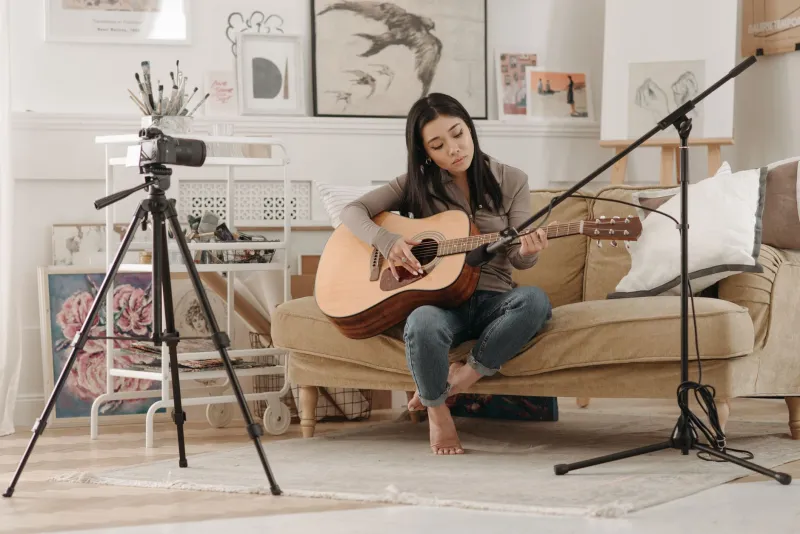
Somebody out here is posting a vulnerable, unfiltered, "this is the real me" TikTok while simultaneously hoping their boss, their grandmother, and that one person from high school with a grudge and a screenshot button are all somehow not watching.
Spoiler: they're watching. They're always watching.
Welcome to the content creator's paradox — a place Ronnieland knows intimately — where authenticity is currency, oversharing is a liability, and the line between the two moves every single day depending on who's in your comments.
The Audience You Didn't Audition
When musicians, comedians, and artists started building audiences online, the deal seemed straightforward: be yourself, make stuff, grow a following. Nobody put in the fine print that "yourself" would eventually need to perform for your parents, your ex, your coworkers, your childhood friends who never left your hometown, and roughly forty thousand strangers simultaneously.
The content creator of 2024 isn't just managing a brand. They're managing a relationship with every single person who has ever hit follow — and every one of those people has a different version of who they think you are.
Your fans see the artist. Your parents see their kid. Your ex sees the person who definitely wrote that song about them (they're right, by the way). Your employer sees a potential HR conversation. And somewhere in the back, lurking quietly, is the person who's been waiting for you to slip up since 2019.
That's a lot of pressure to put on a 60-second video.
Authentic vs. Exposed: There's Actually a Difference
Here's where a lot of creators — especially musicians and comedians who trade in personal storytelling — get tripped up. They conflate authenticity with full disclosure. As if the only way to be real is to hand everyone the unedited director's cut of your entire life.
That's not authenticity. That's a liability waiver.
Real authenticity is about emotional truth, not logistical truth. You can write a song about heartbreak without naming the person. You can talk about struggling without disclosing your bank balance. You can be genuinely, vulnerably yourself without turning your content into a deposition.
The best creators understand this intuitively. They share the feeling, not the receipts. They give you the essence of the experience without the specifics that would blow up their personal lives or someone else's. The result feels just as real — maybe more real — because it's been distilled into something that actually communicates rather than just dumps.
The Ex-Proof, Parent-Proof, Boss-Proof Content Strategy
Okay, let's get practical, because theory is great but you've got a post to schedule.
The 24-hour rule. If something just happened — a breakup, a fight, a career setback, a moment of rage at a specific unnamed person — give it a day before you post about it. Not because the feeling isn't valid, but because the post you write at 11 p.m. in the middle of it is almost never the post you actually want to exist forever on the internet. Sleep on it. The story will still be there. It'll just be better told.
Third-person your specifics. Great comedians and songwriters do this constantly. Instead of "my ex did this thing," it becomes "you ever meet someone who..." You're still telling the truth. You're just widening the frame so the story belongs to everyone, not just the two people who know exactly what happened.
Build your content in layers. Think of your public content like an onion — the outer layers are for everyone (broad, relatable, light). The middle layers are for your real followers (more personal, more specific). The inner layers are for your actual people — the ones who get the newsletter, the Patreon, the group chat. You don't have to give the whole onion to every stranger who stumbles onto your page.
Know your non-negotiables before you post. Decide in advance what topics are off-limits publicly — family members who haven't consented, ongoing legal situations, relationships that involve other people's privacy. Having those boundaries set before you're in the middle of an emotional moment means you won't have to make the decision under pressure.
When the Algorithm Wants More Than You're Willing to Give
Here's the thing nobody tells you about the authenticity economy: the algorithm rewards vulnerability. The more real you get, the more the numbers go up. Which creates a genuinely messed-up incentive structure where creators feel pressure to keep going deeper, keep getting more personal, keep sacrificing another layer of privacy in exchange for reach.
That's a race to the bottom. And the bottom is a place where you've shared everything and feel less known than ever.
The artists and entertainers who sustain long careers — the ones who are still here ten years later, still making stuff, still sane — are the ones who learned to feed the machine without letting it eat them. They figured out how to give the audience something real without giving away everything that matters.
That's not selling out. That's self-preservation. And self-preservation, it turns out, is a pretty important part of having a career.
Your Truth, Your Terms
At the end of the day, you get to decide what "authentic" means for your content. Not the comments. Not the algorithm. Not the ex who's definitely watching your stories on a fake account (we see you).
You can be real without being reckless. You can be open without being exposed. You can build a genuine connection with an audience while still keeping the parts of your life that deserve privacy exactly where they belong — private.
Post like you mean it. Just maybe read it twice first.