You've Got 60 Seconds: The Art of Not Losing a Room Before You've Even Found It
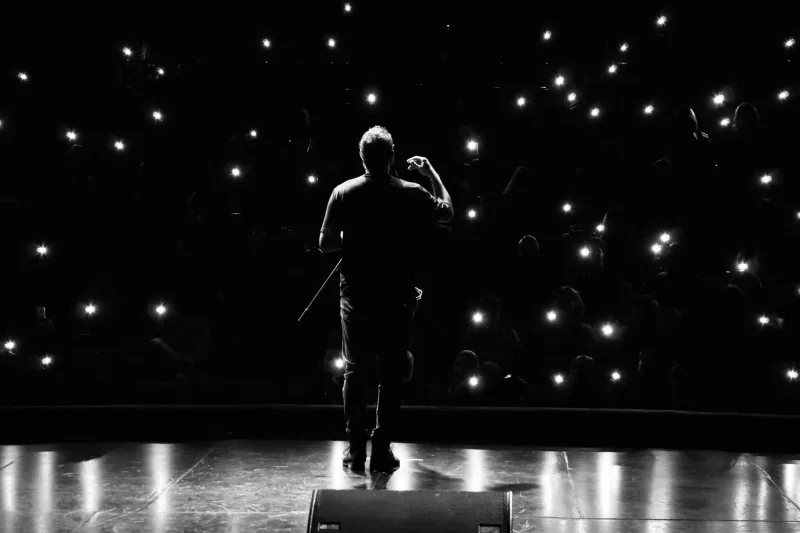
Let's be honest about something that nobody in the green room ever says out loud: audiences are not rooting for you. Not yet, anyway. They're sitting there with their arms loosely crossed, their phones in their pockets like a loaded weapon, and a look on their faces that says convince me. They didn't come to be bored. But they also didn't come ready to hand you their full attention on a silver platter.
That first minute — maybe even the first thirty seconds — is where the whole negotiation happens.
The Science of the First Impression You Can't Take Back
Psychologists have been obsessing over first impressions for decades, and the news is not exactly comforting for performers. Research consistently shows that people form snap judgments about competence and likability within seconds of an encounter. On a stage, that window might be even smaller, because the entire room is doing it simultaneously, and there's a weird social contagion effect — if one section of the crowd goes cold, the chill spreads.
For comedians, that opening moment is essentially a trust handshake. You're saying, I know what I'm doing, and I promise this is worth your time. For musicians, it's even more primal. A song's intro — the first chord, the first beat, the first lyric — is doing the same thing without words. It's signaling genre, energy, intention. It's telling the audience whether to lean in or lean back.
The pressure, in other words, is very real. And it has only gotten more intense.
Social Media Turned the Opening into a Highlight Reel
Here's what changed everything: the clip culture. A few years back, if you bombed your opener at a comedy club in Chicago, it was a bad night. You shook it off, you adjusted, you came back. Now? Someone's got their phone out. The first thirty seconds of your set might end up on TikTok before you've even hit your second bit. And if it's flat, that clip becomes your calling card — the thing people see before they ever show up to a show.
Musicians deal with the same reality. The intro of a live performance gets clipped and posted. The first song of a set becomes the preview that either sells tickets to the next show or quietly convinces people to stay home.
Working performers have had to evolve fast. Comics who used to ease into a set with a slow-burn premise now front-load their strongest material. Bands that used to open with an obscure deep cut are rethinking the strategy entirely.
"I used to open with something I liked," says one touring comedian who's been working the midwest circuit for six years. "Now I open with the thing that gets clipped. Because that clip is doing work for me between shows. It's basically a commercial."
The Mistakes That Kill Rooms (And Careers)
Let's talk about the bad habits, because they're everywhere and they're preventable.
Starting with an apology. This one's a killer. Any version of "bear with me, I'm a little nervous" or "the sound's been a little off tonight" is a surrender before the battle starts. The audience doesn't want your vulnerability in the first ten seconds. They want your confidence. Vulnerability earns power after trust is established, not before.
The generic opener. Comics who lead with "So, how's everybody doing tonight?" are essentially asking the audience to do their job for them. Musicians who open with a bland, mid-tempo filler track because they're "saving the good stuff" are committing the same sin. Start with something that couldn't have come from anyone else.
Misjudging the room's energy. A high-energy crowd at a Friday night show in Nashville is not the same as a Tuesday evening crowd in a small listening room in Portland. The best performers read the temperature before they even hit the stage — watching how people are talking, how loud the room is, how much they've had to drink — and they calibrate accordingly.
Explaining the joke. In music terms, this is the equivalent of over-producing the intro. When you pad the opening with too much setup, too much context, you're burning time the audience didn't agree to give you.
What the Good Ones Actually Do
The performers who consistently nail their openers share a few habits that are worth stealing.
First, they rehearse the opening more than anything else. Not because the rest doesn't matter, but because the opening sets the trajectory. A comedian might have a forty-five-minute set memorized cold, but they'll run the first three minutes a hundred times until it's automatic. That's not obsession — that's smart resource allocation.
Second, they commit fully. Hesitation is the enemy. Even if the joke or the song doesn't land perfectly, a fully committed delivery communicates confidence, and audiences respond to confidence even when they're not laughing or dancing yet.
Third, they personalize whenever possible. A reference to the specific city, the specific venue, something that happened in the news that day — anything that signals I am here, in this room, with you specifically cuts through the generic performance fog and creates an immediate sense of connection.
One touring musician put it this way: "The first song isn't about the music. It's about making the room feel like we're all in on something together. Once they feel that, they'll follow you anywhere."
The Longer Game
Here's the thing about obsessing over your opener that nobody tells you: the work you put into that first minute makes the rest of the performance better almost by accident. When you know your opening is locked in, you step on stage with a different kind of calm. The audience senses it. The room relaxes. And suddenly the second, third, and fourth minutes feel easier because you've already won the most important argument.
Sixty seconds. That's all you get before the room makes up its mind.
Make them count.