Too Many Cooks, Not Enough Soul: The Hidden Loneliness of Big Creative Projects
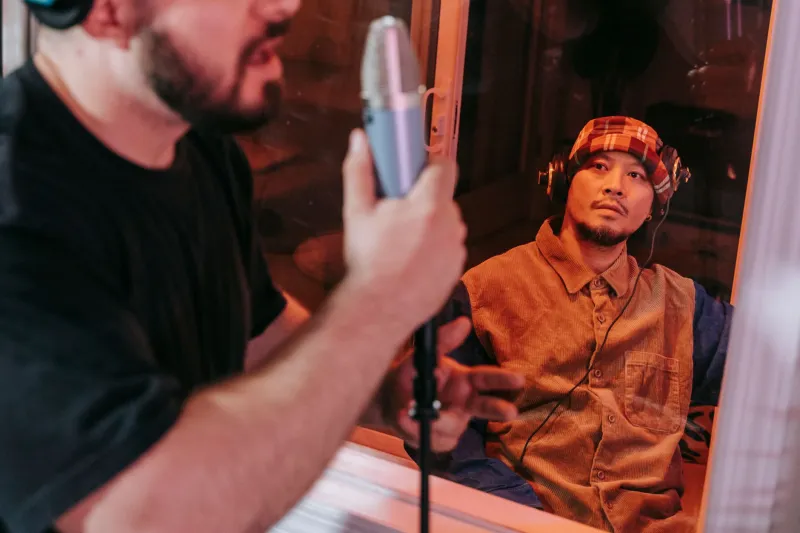
Here's a scenario that should feel familiar: You've got a vision. It's big. Bigger than anything you could pull off solo. So you do the smart thing — you recruit. You bring in the homie who produces fire beats, the friend who writes like her pen is possessed, the videographer who makes everything look like a Netflix original. You build your little dream team, fire up the group chat, and for about forty-eight hours, everything feels electric.
Then somebody misses a deadline. Then somebody else hates the direction. Then you're sitting alone at 2 a.m. staring at a half-finished project, wondering how you managed to feel lonelier now than you ever did when it was just you, your laptop, and a bag of chips.
Welcome to the Collab Trap. Population: everyone who ever tried to make something great with other people.
Why Bigger Teams Feel Like Smaller Rooms
There's a psychological phenomenon that researchers call "coordination loss" — basically, the more people involved in a task, the more energy gets burned just keeping everyone aligned, rather than actually doing the thing. In a creative context, that tax is brutal. Every hour spent mediating between two people who both have strong opinions about the bridge on track three is an hour you're not spending making the bridge better.
But the loneliness piece? That's something the productivity researchers don't fully capture. When you're flying solo, your creative instincts are the law. You make a weird choice, you live with it, you might even love it. The moment you add collaborators, your instincts become proposals. And proposals get voted on. Sometimes they get shot down. And when the thing you were most excited about gets outvoted in a Google Meet with three people who all have slightly different visions, something quietly dies inside you — even if the final product is technically better.
That's the paradox nobody puts in the collaboration pitch deck.
The Ego Math Nobody Wants to Do
Here's the uncomfortable truth about working with talented people: talented people have opinions. Strong ones. And when every person in the room is genuinely skilled, the power dynamics get weird fast. Who gets final say? Whose aesthetic wins when there's a creative standoff? Who's the "lead" on a project that everyone agreed was supposed to be equal?
In Ronnieland's experience watching creative teams flame out in spectacular fashion, the answer is almost always: whoever cares the most gets hurt the most. The person who was most invested in the original vision ends up the most isolated, because they're the one who feels every compromise like a paper cut.
And the dirty irony? You can't even be mad at anyone, because everyone's trying their best. That's what makes it lonely in a way that's hard to explain at the dinner table.
Managing Expectations Before They Manage You
None of this means you should stop collaborating. Some of the greatest art in human history — from Thriller to Seinfeld to the entire Marvel Cinematic Universe — came from people forcing their visions to coexist. But there are ways to protect yourself emotionally without turning into a creative control freak.
Get weird early. Before the project really kicks off, have the uncomfortable conversation about creative authority. Who's the tiebreaker? What happens when someone wants to bail? What does "done" actually look like? It feels awkward to have this conversation when everyone's excited, but it's a lot less awkward than having it when the project is 80% finished and someone's threatening to pull their contributions.
Keep a private creative journal. This one sounds soft, but it's genuinely useful. Maintain a space — a notes app, a voice memo folder, a dusty notebook — where you can put your unfiltered ideas without them becoming group property. It preserves your original instincts and gives you something to return to when the collaboration starts to blur your own artistic identity.
Assign lanes, not just roles. There's a difference between giving someone a title and giving someone a domain. "You're the producer" is a title. "You own every decision about arrangement and instrumentation, and nobody overrules you there" is a lane. Lanes reduce the number of things that go to committee, and committees are where creative momentum goes to die.
The Part That Actually Makes It Worth It
Here's the thing, though — and this is important — the loneliness of a big collab isn't a sign that something's wrong. It's a sign that you care. The artists who feel nothing when their vision gets compromised are usually the ones whose work feels like nothing too.
The tension between your private creative self and the collaborative beast you've agreed to feed? That tension is generative. It forces you to articulate why you want what you want. It forces you to fight for the things that actually matter and let go of the things that don't. And sometimes — not always, but sometimes — what comes out the other side is something none of you could've made alone, and it's better than anything you would've settled for in solitude.
But you have to survive the middle part first. And the middle part is lonely, chaotic, and occasionally makes you want to delete the group chat and move to Montana.
That's normal. Stay in the chat. Just make sure you're still talking to yourself too.