Why the Weirdest Show Lineup You've Ever Seen Might Be the Best Career Move in the Business
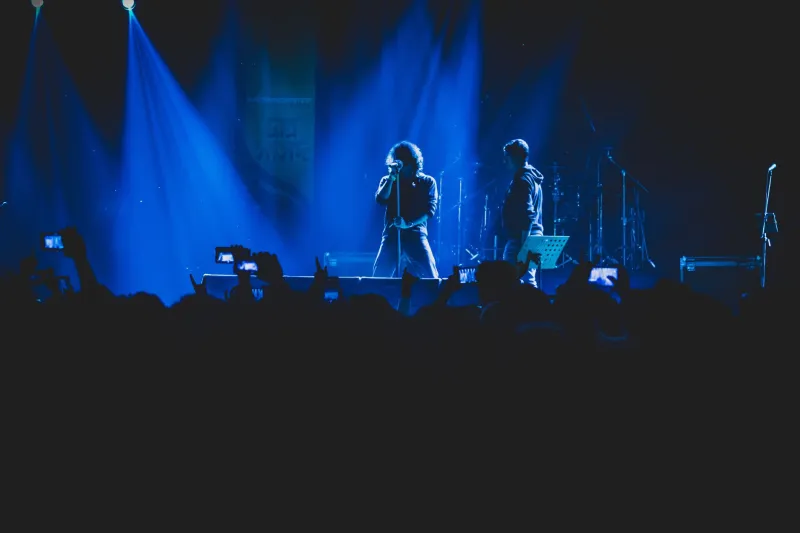
Picture this: You're at a mid-size venue on a Friday night. You've got a beer in your hand, you're maybe two songs into mentally rehearsing what you're going to say to that person you spotted near the merch table, and then — out of nowhere — a comedian walks onstage before the band you came to see. Half the crowd looks confused. The other half starts laughing before the comic even opens their mouth.
By the time the headliner finally hits the stage, the room is electric.
That's not an accident. And if you're a musician or a comedian still playing it safe by sticking strictly to your own genre lane, you might be leaving one of the biggest audience-building tricks in the industry sitting right there on the table.
The Genre Bubble Is Real — And It's Quietly Killing Your Growth
Here's the thing about traditional show lineups: they're comfortable. A country singer opens for another country singer. A local indie band warms up the crowd for a touring indie act. It makes sense on paper, and booking agents love the predictability. But comfort, as anyone who's ever tried to build a fanbase from scratch will tell you, doesn't exactly set rooms on fire.
When you match genres perfectly, you're essentially serving the same audience the same flavor of what they already love. Which is fine! But you're not surprising anyone. You're not creating a moment. And in 2024, moments are the currency that actually moves the needle.
Cross-genre pairings — specifically, comedians opening for bands and musicians opening for comedians — flip the whole script. The audience didn't come expecting you, which means every laugh and every chord lands with a kind of freshness that a perfectly matched opener rarely achieves.
What Comedians Bring to a Music Crowd (That Nobody Talks About)
Let's say a comedian gets booked to open for a touring indie rock band in Austin or Nashville or Brooklyn. The crowd showed up for guitar riffs and maybe a little emotional catharsis. They did not show up expecting to laugh until their face hurts.
But here's the magic: laughter is the fastest known way to drop a stranger's defenses. A comedian who can work a music crowd — acknowledging the weird energy, riffing on the venue, connecting with people who weren't necessarily there for them — walks away with something invaluable: a roomful of new fans who discovered them completely by accident.
Emerging comedian Dani Reyes, who's been working the Chicago circuit for the past three years, put it this way during a recent conversation: "Opening for a band is terrifying and also the best thing I ever did for my career. Those people weren't scrolling past my Instagram ad. They were there, in the room, with nowhere to go. You either win them over or you don't. And when you do, they remember you forever."
That captive audience dynamic is something comedians grinding through open mics almost never get. And it's sitting right there, available, if they're willing to take the leap.
What Musicians Bring to a Comedy Crowd (That's Even Weirder and Better)
Now flip it. A singer-songwriter — let's say someone doing atmospheric folk or lo-fi bedroom pop — opens for a standup comedy headliner. The audience came for jokes. They're already in a loosened-up, receptive mood. They want to feel good.
A musician who understands the energy of that room and plays into it — maybe keeps the set short, punchy, maybe even cracks a few self-aware jokes about being the unexpected musical interlude — can absolutely destroy in the best way. Comedy audiences tend to be curious, opinionated, and vocal. If they like you, they'll tell everyone they know. If they really like you, they'll follow you home on Spotify before the headliner even hits the stage.
Marcus Tillman, an indie folk artist based out of Atlanta who's been experimenting with exactly this kind of booking, described the experience as "accidentally finding your people in a room that wasn't built for you. Comedy fans are some of the most loyal audiences in the country. Once they adopt you, it's real."
The Fanbase Math Nobody's Doing
Here's the part that should make every emerging artist sit up straight: traditional genre-matched lineups build deep audiences. Cross-genre pairings build wide ones.
Deep is great. Deep means superfans who buy the vinyl and the hoodie and the VIP package. But wide is how you survive the algorithm. Wide is how you eventually sell out rooms in cities where nobody's heard of you yet. Wide is how you end up on a playlist next to an artist you'd never normally be grouped with — and suddenly, a whole new demographic finds you.
When a comedian's fans discover a musician through a cross-genre show, and then share that musician's track in a group chat with the caption "okay wait, this is actually fire," that's organic reach that no ad spend can replicate. Same thing in reverse: a music fan who stumbled onto a comedian during a show and then binge-watches their YouTube specials is now a comedy convert who came through the back door.
How to Actually Make This Happen
If you're an emerging artist — comedian or musician — reading this and thinking "okay, but how do I actually get booked this way," the answer is simpler than you'd expect: ask.
Reach out to venues that host both music nights and comedy nights. Pitch yourself as the wildcard. Frame it as an experience, not just a performance. Venue bookers are often more open to experimentation than artists assume, especially at the mid-tier level where they're always looking for something that'll get people talking on social media.
Building a relationship with artists in the other lane helps too. Comedians and musicians who genuinely support each other's work — who show up to each other's shows, who shout each other out online — create a natural pipeline for exactly this kind of cross-pollination.
The Ronnieland Take
At the end of the day, the entertainment world is at its best when it refuses to color inside the lines. The best nights out you've ever had probably involved something unexpected — a moment where the vibe shifted and the room collectively thought wait, what is happening, and why do I love it?
That's what a great cross-genre opening act does. It surprises people into caring. And in a world where everyone's attention is being fought over by a thousand different screens and streaming services and short-form videos, surprising someone into genuinely caring about you might just be the most valuable thing an artist can do.
So yeah. Book the weird lineup. Open for the comedian. Let the singer-songwriter go on before the headliner. See what happens.
What happens is usually something worth talking about.