You Had to Be There: The Secret Art of Building Inside Jokes That Turn Your Audience Into a Whole Community
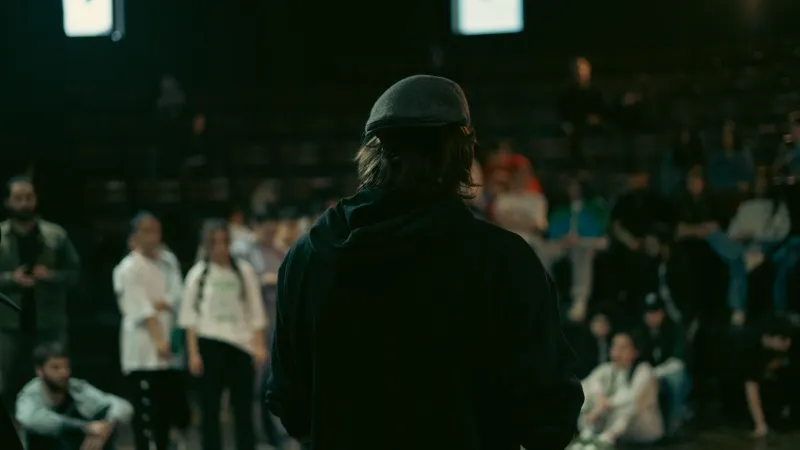
You know that feeling when you're at a concert and the artist does something — a specific ad-lib, a little dance move, a callback to an older song — and the whole crowd loses it while everyone outside that room would have absolutely no idea what just happened? That moment. That is the thing we're talking about today.
It's not a viral moment. It's not a trending sound. It's something rarer and more valuable: a shared language between an entertainer and the people who actually showed up. And in 2024, with attention scattered across a hundred different platforms and a thousand new creators dropping content every minute, that shared language might be the most powerful thing in the business.
Welcome back to Ronnieland. Let's talk about why "you had to be there" is actually the goal.
The Difference Between a Follower and a Fan
Numbers are seductive. A million followers looks impressive in a bio. But ask any working comedian or independent musician and they'll tell you: a thousand people who are genuinely in it with you are worth more than a million passive scrollers who clicked follow and forgot about you by Tuesday.
The distinction comes down to investment. A follower found you interesting for thirty seconds. A fan has watched enough of your content, been to enough of your shows, or streamed your music enough times that they've started to absorb your references, your recurring themes, your specific way of seeing the world. They're not just consuming you — they're fluent in you.
And the entertainers who cultivate that fluency intentionally? They build something that functions less like an audience and more like a community. Or, to use the word that keeps coming up when you talk to people who study this stuff: a tribe.
How Comedians Build Comedy Universes
The callback is one of the oldest, most reliable tools in stand-up comedy — and it works for a very specific psychological reason. When a comedian drops a reference in the second half of a set to something they mentioned in the first half, the audience doesn't just laugh at the joke. They laugh at the fact that they remembered it too. The callback rewards attention. It says: you were paying close enough attention to catch this, and that makes you part of something.
Now scale that across a career. Kevin Hart has been telling variations of the same story — about his family, his height, his insecurities, his come-up — for decades. New fans can drop in at any point and enjoy the show. But longtime fans catch the callbacks to jokes from ten years ago, the evolution of a character, the way a recurring theme has changed as his life changed. They're not just watching a set. They're reading a chapter in an ongoing story they've been following for years.
Chappelle does this too. So does Ali Wong, whose two Netflix specials are in explicit conversation with each other — the second one only fully lands if you've seen the first. She's not making content for the algorithm. She's making a universe for the people who opted in.
How Musicians Turn Sounds Into Secret Handshakes
Music has its own version of the inside joke, and it operates through something even more visceral than a spoken callback: the sonic signature.
Drake's "certified lover boy" era introduced so many recurring motifs — the specific 40-produced sound palette, the OVO owl, the Toronto references, the emotional vulnerability wrapped in flex — that his fans developed a shorthand for discussing his work that functioned almost like a dialect. When he drops a specific ad-lib or references a running theme, the reaction from core fans isn't just enjoyment. It's recognition. I know what this means. Do you?
Beyoncé has built an entire mythology around this concept. The Beyhive isn't just a fanbase — it's a culture with its own references, its own lore, its own inside knowledge. When she drops an album with no announcement, the people who are in it experience something completely different from casual listeners. They catch the callbacks to Lemonade, the visual references to Black Is King, the lyrical threads that run through a decade of work. The insider knowledge transforms the experience.
Smaller, independent artists do this too — sometimes even more effectively because the community is tighter. A regional rapper with 50,000 dedicated fans who all share a specific cultural reference point can generate more genuine excitement per person than a mainstream act with ten million passive streams.
The Parasocial Relationship Isn't a Bug — It's a Feature
Psychologists use the term "parasocial relationship" to describe the one-sided bond that fans form with public figures — the feeling of knowing someone who doesn't know you back. In some contexts, this gets talked about as something slightly concerning. In entertainment, it's the engine.
When a creator consistently shows up as themselves — with recurring themes, familiar references, a recognizable worldview — fans start to feel like they genuinely know that person. And when that creator then acknowledges them — through shoutouts, callbacks to fan reactions, responding to the community's running jokes — the parasocial bond becomes something more mutual. Something that feels, from the fan's side, like actual friendship.
This is why the creators who last don't just broadcast. They build a feedback loop. They notice what lands with their core audience and they incorporate it, reference it, build on it. The audience starts to see their own fingerprints on the work, and that sense of co-ownership is incredibly powerful.
Building Your Own Shared Language
If you're a creator trying to cultivate this kind of community — whether you're doing comedy, making music, or building a brand — the playbook is simpler than you might think:
Be consistent in your themes. You don't have to talk about the same thing every time, but there should be a throughline. A recognizable perspective. Something that says this is unmistakably from this person.
Acknowledge your core audience explicitly. Reference things they've said. Build on jokes that started in the comments. Make them feel like collaborators, not consumers.
Reward the people who've been there longest. Drop callbacks. Reference old material. Make it valuable to have been paying attention from the beginning.
Let the language evolve naturally. The best inside jokes aren't engineered — they emerge from genuine, repeated interaction. Create the conditions for them to form, then lean into what develops.
Going viral is a lottery ticket. Building a tribe is a construction project. It takes longer, it's less flashy, and it doesn't always show up in your analytics the way a trending moment does.
But when you're standing in a room full of people who all know exactly what you mean when you reference that one thing from two years ago? That's not an audience anymore.
That's Ronnieland.